A light micrograph of a cerebellum cross‑section showing tightly folded, branching layers in yellow and brown colours

First atlas of brain organization shows development over a lifetime

Scans of more than 3,500 people allow scientists to draw up a guide to the brain areas that work together from birth to 100 years old.

Advertisement

  • Genome-wide analysis shows European dogs existed by 14,200 years ago, were already genetically distinct, received less Neolithic Southwest Asian admixture than humans did and contributed substantially to later European dogs.

    • Anders Bergström
    • Anja Furtwängler
    • Pontus Skoglund
    ArticleOpen Access
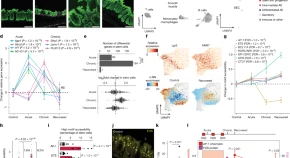
  • Single-nucleus chromatin and RNA sequencing identifies epigenetic chromatin domains that confer vulnerability to paediatric brain tumours such as ependymomas, providing insight into the development of such tumours despite ‘quiet’ genomes.

    • Alisha S. Kardian
    • Hua Sun
    • Stephen C. Mack
    ArticleOpen Access
  • fMRI data from individuals of a wide range of ages (from a few days to 100 years old) are used to map the key organizational axes of functional connectivity in the human cortex throughout the lifespan.

    • Hoyt Patrick Taylor IV
    • Khoi Minh Huynh
    • Pew-Thian Yap
    ArticleOpen Access
scientists constructing China’s research system.

China

China’s lead in the Nature Index is growing, but for how long can it continue on this trajectory?
Nature Index

Advertisement

Nature Careers

Science jobs

Advertisement