Trust Your Agent.
See & Control What It Does.
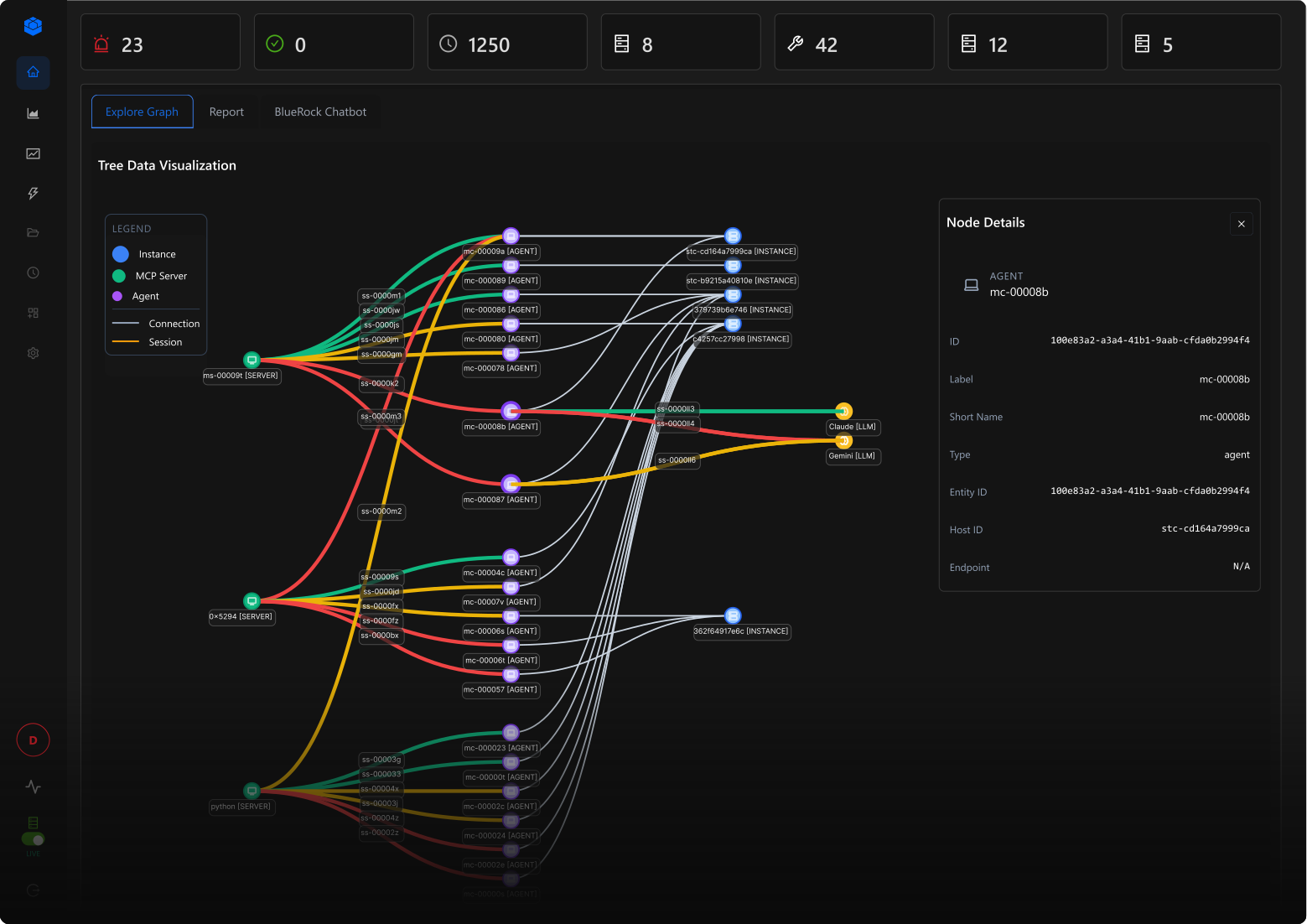
BlueRock brings Trust Context to every step of the Agentic Action Path — giving teams the real-time visibility and signals needed to understand agent behavior, control execution with confidence, and safely move from development to production.
The Structural Shift
Execution Is No Longer Defined in Code
Agents decide what to do at runtime — selecting tools, invoking MCP servers, and generating execution paths on the fly.
Seeing and shaping how that execution unfolds requires a runtime layer that connects model decisions, capability invocation, and downstream actions.
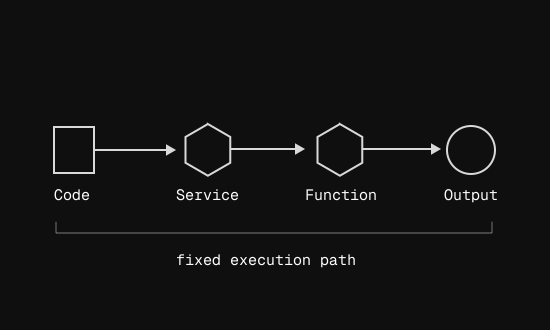
DETERMINISTIC ARCHITECTURE
Traditional Software
Diagram: Code → Execution
Predictable paths
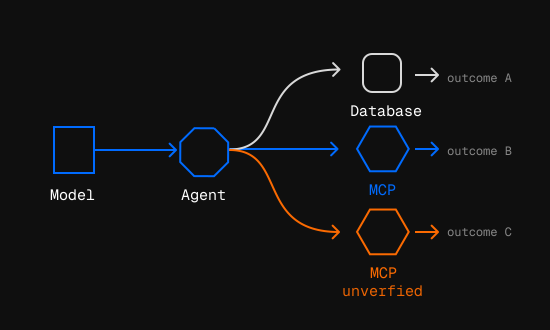
NON-DETERMINISTIC ARCHITECTURE
Agentic Systems
Model → Agent → Tools → MCP Server → Execution → Outcome
The Failure
The Agentic Execution Gap
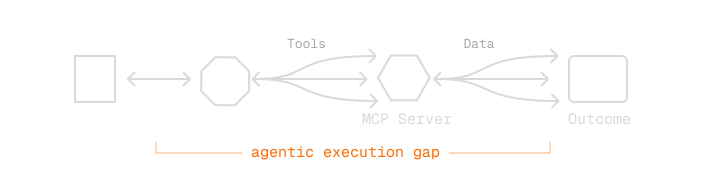
Execution now unfolds in real-time across tools, MCP servers, and infrastructure, but the context needed to understand and control it does not travel with execution.
As a result, teams struggle to see what happened, why it happened, and how to keep behavior on the rails in production.
The Platform
Control & Visibility Start with Trust Context
Agentic systems cannot be understood or governed through fragmented signals alone. Decisions, tool calls, MCP server interactions, and execution events are captured in isolation — without the trusted context needed to connect them.
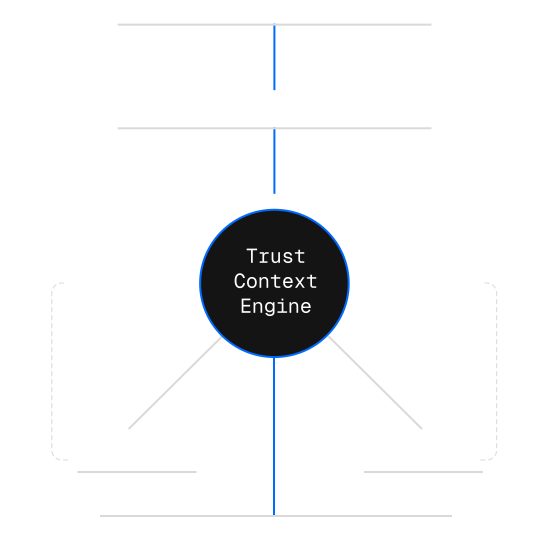
Trust Context travels with execution, linking decisions, actions, and outcomes across the Agentic Action Path. This creates a real-time view of how behavior unfolds and the ability to guide it as it happens.
BlueRock turns disconnected activity into a connected view of agent behavior.
Explore the MCP Trust Registry
Discover MCP servers, tools, and agentic capabilities with verified ownership, clear capability definitions, and trust signals.
Quickly identify components you can confidently build with — and understand what they expose before agents invoke them. BlueRock feeds that ownership, capability, and trust data directly into the Trust Context Engine, adding the context needed to better understand and guide execution in real time.
Start Anywhere.
Move to Production with Confidence.
BlueRock supports you at every stage of building agentic systems—from early experiments to production-scale execution. Use the resources you need, when you need them, with shared context carried across the lifecycle.
Reduction in manual
log correlation
Latest articles
Common Questions
Everything you need to know about BlueRock and the agentic execution layer.
What does BlueRock do?
BlueRock provides deep observability and guardrails across the full Agentic Action Path — from model decision through agent actions, tool calls, MCP server interactions, and data access to outcome. Powered by the Trust Context Engine, BlueRock enriches every step of execution with identity, capability, and trust attributes. The result: a shared, continuous view across development, security, and operations of what agents actually did in production — and whether it was trustworthy.
What is the Agentic Execution Gap?
The Agentic Execution Gap is the disconnect between how AI agents behave in production — and what teams can actually see. Developers stitch logs together to reconstruct behavior. Security lacks intent-level visibility. Operations correlates signals manually. Each team sees a fragment. No one sees the whole. It emerges because execution is no longer defined in code. Behavior is generated dynamically at runtime — and existing visibility tools weren’t built for that.
What is the Trust Context Engine?
The Trust Context Engine is BlueRock's core technology layer. It enriches every step of agent execution with identity, trust attributes, and operational signals — across agents, tools, MCP servers, and infrastructure. This continuous context is what makes observability complete and guardrails precise, rather than fragmented or overly broad.
Why do logs and traces fall short for agentic systems?
Logs and traces show that actions occurred — but not who initiated them, what capabilities were invoked, or how execution propagated across systems. Agents select tools and trigger downstream actions dynamically at runtime. The context needed to interpret behavior rarely travels with execution. BlueRock’s Trust Context Engine changes that. It attaches identity, capability, and trust signals to every step of the Agentic Action Path — so teams understand not just what ran, but whether it was trustworthy.
How does BlueRock let teams move fast without sacrificing safety?
BlueRock maps the full Agentic Action Path and enriches it with trusted context — so developers get the clarity they need to ship faster, and security gets the context they need to govern without blocking. This is what we call the blue path: the middle ground between unrestricted experimentation and overly restrictive governance. Trusted context is what makes both possible at the same time.